
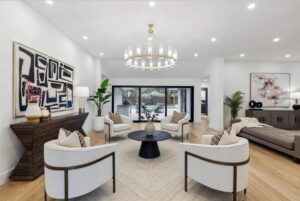
One of my clients once told me “You just seem to have a magic touch”. But it actually comes from a lot of experience about a lot of details, and lighting is one of those little details…
Every Home I Prep Seems to Need New LED Lights
Weren’t we told that LEDs would last forever (50,000 hours)? So why do we replace them in almost every listing?
At first I wondered:
🤔 Is this some planned-obsolescence conspiracy?
🤔 Are homeowners just unlucky?
🤔 Are electricians doing something wrong?
So I did some digging, and the answer is simpler and more annoying than a conspiracy, but leads to some solid recommendations…
We weren’t lied to about LEDs, we were misled about LED bulbs.
Here’s what I learned:
• The LED chips really do last a very long time
• The electronics inside the bulb don’t
• Enclosed ceiling lights slowly cook them to death
Bathrooms. Hallways. Closets. Flush-mount domes.
Exactly the lights most homes have.
Heat builds up.
Tiny electronics fail.
The bulb dies, even though the LEDs themselves are fine.
Why this matters in real estate you ask (or I imagine you ask):
Burned-out bulbs make a home feel:
❌ Neglected
❌ Dim
❌ Older than it is
Buyers notice, even if they don’t consciously register it.
What I recommend to homeowners:
✅ For enclosed lighting, only buy bulbs rated for enclosed fixtures, so the electronics won’t cook so easily
✅ Replace failing LEDs before listing
✅ Stop assuming “LED = maintenance-free”
✅ Accept that cheap LEDs are basically disposable
So… it is not completely because of a shadowy conspiracy, though I still have my suspicions.
It’s mostly just cost-cutting on electronics, heat, and marketing optimism.
If your LED lights keep failing, you’re not crazy. And no, your house isn’t cursed.
It just needs better more appropriate bulbs… and a good realtor 😉
Rules for Staging a Home
Keep in mind staging lighting isn’t about brightness or efficiency.
It’s about making people feel: Relaxed, Comfortable, Safe, Like they want to stay
The winning formula (use this everywhere)
1. Warm, not yellow
2700K to 3000K is the sweet spot.
-
2700K = cozy, incandescent feel
-
3000K = slightly cleaner, still warm
Avoid:
-
4000K+ (feels clinical, office, flip)
-
Anything blue-ish (buyers hate it instinctively)
Rule: If it feels like a hospital or tech office, it’s wrong.
2. Even, soft light from above
For recessed lighting:
-
BR30 bulbs (best default)
-
PAR30 only where you want definition
Why BR30 wins:
-
Softer beam edges
-
No harsh cones on the floor
-
Faces look better
-
Rooms feel calmer
Harsh spotlighting makes homes feel tense and smaller.
3. Moderate brightness, not “wow bright”
Target range:
-
700–900 lumens per recessed bulb
-
Enough to feel open, not blinding
Too bright:
-
Feels like a showroom
-
Shows flaws
-
Feels aggressive
Buyers want “pleasant,” not “impressive.”
4. Layered lighting beats ceiling-only
Best staged homes use three layers:
-
Ambient – recessed ceiling lights
-
Task – lamps, under-cabinet, pendants
-
Accent – a corner lamp, art light, fireplace wash
This creates depth and warmth.
Ceiling-only lighting = flat, rental vibe.
5. Consistency matters more than perfection
This is huge.
-
Same color temperature throughout the house
-
No mixing warm and cool whites
-
Replace ALL burned-out bulbs
One dead or mismatched bulb subconsciously signals:
“Something here hasn’t been maintained.”
Buyers notice even if they don’t say it.
Room-by-room quick spec
Living room / Family room
-
BR30, 2700–3000K
-
Lamps on side tables
-
Avoid tight spotlights
Kitchen
-
Recessed BR30 at 3000K
-
Under-cabinet lighting if possible
-
Pendants warm, not white-blue
Bedrooms
-
Warmest light in the house (2700K)
-
Lamps > ceiling brightness
-
Soft, calming
Bathrooms
-
3000K max
-
Even light around mirrors
-
No harsh overhead-only glare
Hallways
-
Slightly dimmer than rooms
-
Continuous, even lighting
One-sentence staging rule
Make the light feel like early evening in a nice home, not noon in an office.