California’s wildfire-safety rules are changing—and the five feet immediately surrounding a home are receiving particular attention.
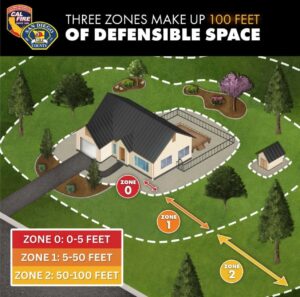
On August 19, 2026, the California Board of Forestry and Fire Protection approved statewide regulations for “Zone Zero,” also called the ember-resistant zone. Zone Zero extends from a building’s exterior walls through the first five feet around the structure, including areas next to attached decks and projections.
The goal is straightforward: reduce the chance that wind-driven embers will ignite combustible material beside a home.
For Lamorinda homeowners, however, there is an important distinction. The statewide regulations have been approved but must still complete the administrative process before becoming effective. Meanwhile, the local Fire District already has year-round local defensible-space requirements.
Why are the first five feet so important?
During a wildfire, embers can travel well ahead of the flames. If they land in dry leaves, bark mulch, vegetation, firewood or other combustible material beside a house, they may ignite the structure.
Zone Zero is intended to interrupt that path. It is part of a broader wildfire-preparation strategy that also includes maintaining vegetation farther from the house, clearing roofs and gutters, and hardening vulnerable parts of the structure.
What does MOFD currently require?
Current Moraga-Orinda Fire District requirements include:
- Removing combustible ground cover, such as bark and mulch, within two feet of structures
- Maintaining vertical clearance beneath plants located within two feet of a structure
- Removing dead or dying vegetation, rubbish and non-irrigated brush
- Keeping grasses and weeds below the prescribed height
- Removing Monterey pine or eucalyptus trees located within five feet of structures or attached decks
- Clearing branches, leaves and needles from roofs and gutters
- Maintaining required clearance between tree branches, roofs and chimney outlets
These requirements apply throughout the year. Homeowners should consult MOFD’s complete standards because the rules extend beyond Zone Zero to vegetation, roadsides, fuel breaks and other exterior hazards.
Does Zone Zero mean all landscaping must be removed?
No. “Zone Zero” should not automatically be interpreted as “no landscaping.”
The appropriate treatment depends on the plant, its condition, irrigation, spacing, proximity to the structure and the materials surrounding it. Dead vegetation and combustible debris create very different risks from properly maintained, appropriately located plants.
Before removing mature landscaping, homeowners should review the current MOFD requirements or request guidance from a qualified fire-safety or landscape professional.
What should Lamorinda sellers do?
Wildfire preparation is increasingly relevant to the sale process. Buyers may consider defensible space, insurability and the potential cost of future mitigation when evaluating a property.
Before listing a home, a seller can:
- Inspect the first five feet around the house and attached decks.
- Remove accumulated leaves, needles and other combustible debris.
- Check bark mulch, wood storage and dense foundation planting.
- Clean roofs and gutters.
- Document completed mitigation and home-hardening improvements.
- Consider requesting a professional or MOFD assessment before describing the property as compliant.
Sellers should avoid making an unsupported claim that a home is “Zone Zero compliant.” Requirements can change, and compliance depends on property-specific conditions.
What should buyers investigate?
Buyers should look beyond a home’s interior finishes and consider the entire wildfire-risk picture.
Useful questions include:
- What combustible materials are located beside the structure?
- Are tree limbs, gutters and roof surfaces properly maintained?
- Is a wooden fence or gate attached directly to the house?
- Has the property received a recent fire-district inspection?
- What mitigation work has been completed?
- Can the buyer obtain acceptable homeowners insurance for this specific address?
Insurance availability and pricing can vary substantially from one property to another. Buyers should obtain an address-specific insurance indication while their investigation contingency remains in place.
The practical takeaway
California’s Zone Zero regulations will make the first five feet around a home more prominent in wildfire preparation. In Lamorinda, homeowners should also remember that MOFD already enforces local, year-round exterior-hazard requirements.
A thoughtful review now can improve safety, reduce surprises during a future sale and help buyers understand how a property has been maintained.
For advice about preparing, buying or selling a home in Orinda, Lafayette or Moraga, contact Vlatka Bathgate at 925-597-1573 or Vlatka@OrindaRealty.com.
Vlatka Bathgate
Coldwell Banker Realty
DRE #01390784
Sources: California Board of Forestry and Fire Protection; Moraga-Orinda Fire District.
#ZoneZero #WildfirePreparedness #DefensibleSpace #OrindaRealEstate #MoragaRealEstate #LamorindaRealEstate